Why Your Service Business Needs a Booking Platform — Not a Meeting Scheduler
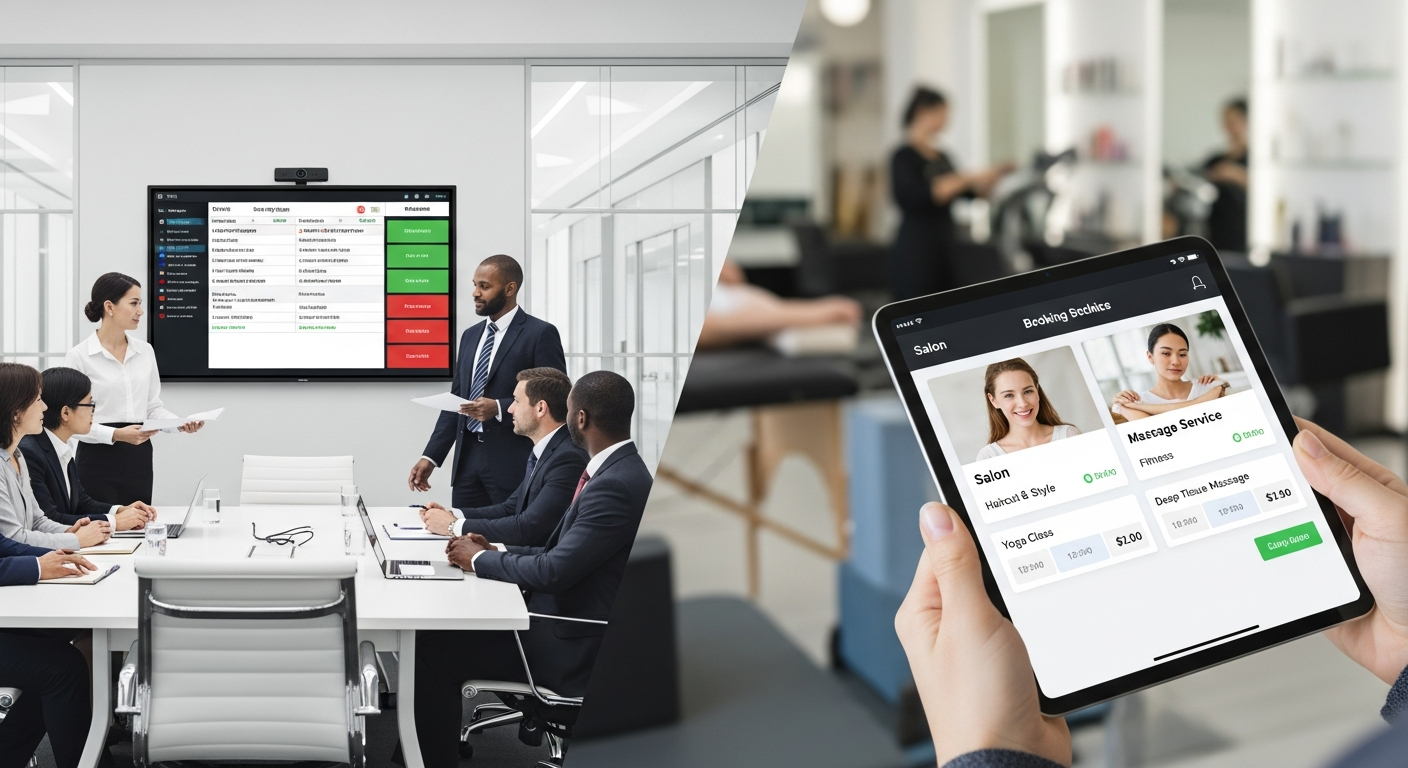
There's a category of software that gets used by service businesses because it's free, familiar, or easy to set up — even though it was designed for an entirely different use case. Meeting schedulers like Calendly, HubSpot Meetings, and Google Calendar's appointment scheduler fall squarely into this category.
They solve the coordination problem: finding a time when two busy people are both available. They're excellent at that. But service businesses don't have a coordination problem. They have a revenue problem: how do you fill your calendar, collect payment reliably, prevent no-shows, and grow your client base systematically?
Meeting schedulers don't answer those questions. Service booking platforms do.
Where Meeting Schedulers Stop
Meeting schedulers were designed around the assumption that: — The person scheduling is not paying for the meeting — Meetings are generally equal in duration and value — The relationship between the parties already exists (or is being initiated) — No-shows are inconvenient but not financially costly
None of these assumptions apply to a service business. Every appointment is a revenue transaction. Services have different durations, prices, and requirements. Clients are often new, with no established relationship. No-shows cost real money.
What Service Booking Platforms Do Differently
Service-specific features that meeting schedulers lack:
1. Payment at booking — Not a redirect to a payment link. Embedded Stripe checkout that's part of the booking flow. (mybokr.com/blog/how-to-collect-payment-when-clients-book-online)
2. Per-service pricing — Your booking page is a menu, not a single meeting type. Each service has its own price, duration, and availability. (mybokr.com/blog/how-to-manage-multiple-services-one-booking-system)
3. Deposit and no-show protection — Required deposits at booking with automatic policy enforcement. (mybokr.com/blog/should-service-businesses-charge-no-show-fees)
4. Buffer time per service — Different services need different transition time. Meeting schedulers apply one buffer to all events. (mybokr.com/blog/how-to-set-buffer-time-between-appointments)
5. Automated client reminders with rebooking — Not just calendar invites, but full reminder sequences with reschedule links. (mybokr.com/blog/automated-appointment-reminders-reduce-no-shows)
6. Revenue tracking — See your booking revenue, average ticket value, and upcoming cash flow in your dashboard. (mybokr.com/blog/how-to-track-revenue-from-bookings-small-business)
7. Marketplace listing — Discovery for new clients, not just a private link you send to people you already know.
The Switching Moment
Most service businesses start on meeting schedulers because they're zero-friction to set up. The switch happens when: the first major no-show costs them a meaningful amount of money, they realize they're spending 5+ hours per week on manual payment follow-up, or they try to collect a deposit and discover their scheduler has no mechanism for it.
Don't wait for that moment. Build the right infrastructure now.
Get a Platform Built for Service Revenue
MyBokr (mybokr.com) is built specifically for businesses that earn revenue through appointments. Set up your professional service booking page in under 30 minutes at mybokr.com.